
South Sudan President Salva Kiir has sent his senior security adviser, Tut Gatluak, to Sudan for urgent diplomatic talks following a sensitive agreement involving the contested Heglig oilfield, a facility critical to South Sudan’s oil exports and national revenue South Sudan News.
Gatluak met Sudan’s de facto leader, General Abdel Fattah al-Burhan, in Port Sudan, where he delivered a written message from President Kiir amid deepening instability caused by Sudan’s ongoing conflict between the Sudanese Armed Forces (SAF) and the paramilitary Rapid Support Forces (RSF).
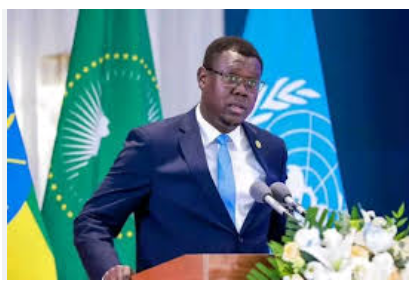
According to Sudan’s state news agency SUNA, the discussions focused on strengthening bilateral relations, with particular attention on energy cooperation, oil security, trade, and economic ties between the two neighbouring states.
Sudan’s Undersecretary of Foreign Affairs, Maawiya Osman Khalid, described the visit as “one of the most important at this time,” noting that General al-Burhan had instructed relevant government agencies to engage South Sudanese officials on issues of mutual interest.
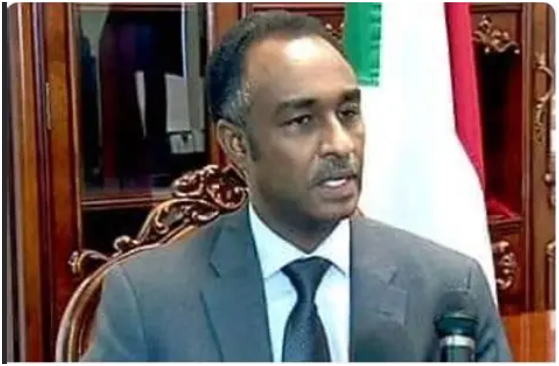
South Sudan’s Foreign Minister, Monday Semaya Kumba, who was part of the delegation, said the talks were “very fruitful, very transparent, and very promising,” adding that further bilateral and technical meetings would continue, especially in relation to the oil sector.
The diplomatic engagement follows a controversial tripartite security arrangement that allowed South Sudanese forces to deploy to the Heglig oilfield in Sudan’s West Kordofan State. The deal requires both the RSF and SAF to withdraw from the area, while South Sudanese troops secure the oil installations against sabotage.
Heglig is a strategic energy hub, processing between 80,000 and 100,000 barrels of crude daily before export through a 1,600-kilometre pipeline linking South Sudan’s Unity oilfields to Port Sudan. The field was briefly seized by RSF fighters, forcing SAF units to retreat across the border into South Sudan, where they reportedly surrendered their weapons.
Footage aired on South Sudan’s state television showed South Sudanese soldiers operating alongside RSF fighters at the site, an image that has raised questions about neutrality, sovereignty, and the regional implications of the security arrangement.
For Sudan’s Port Sudan–based government, the loss of control over Heglig represents a significant financial setback, as it relies heavily on transit and processing fees from South Sudan’s oil exports. For Juba, however, uninterrupted oil flow remains an economic lifeline, accounting for the vast majority of state revenue.
Analysts say Kiir’s outreach signals Juba’s attempt to stabilise oil operations while carefully navigating Sudan’s internal war, avoiding entanglement while safeguarding its own fiscal survival.
JubaWatchdog — Independent. Fearless. Unblinking.
