Lawmakers says the nationwide verification process will help eliminate fraudulent salary payments and improve transparency across government institutions.
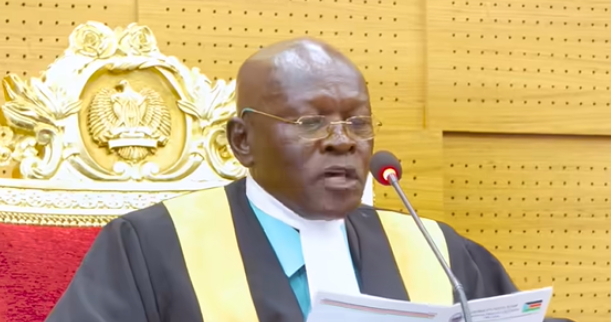
Parliament Launches Workforce Audit to Improve Accountability and Eliminate Payroll Irregularities
JUBA, South Sudan — Speaker of Parliament Joseph Ngere Paciko on Monday launched a comprehensive staff screening exercise aimed at improving administrative efficiency, strengthening accountability, and streamlining workforce management within the National Legislature.
The exercise is being conducted under the supervision of Speaker Paciko, alongside Second Deputy Speaker for Administration and Finance Abuk Payiti and Clerk to the Assembly Santino Deng.
According to the Speaker’s office, the screening covers employees across all departments and support units, including cleaners, messengers, information officers, ICT personnel, Hansard staff, logistics and procurement officers, parliamentary service commission staff, parliamentary caucus employees, drivers, and administrative officers.
Addressing staff members during the launch, Speaker Paciko said the exercise was designed to establish an accurate and comprehensive record of all employees working within the institution.
“This document was prepared to have details of everyone here,” Paciko stated.
The audit seeks to verify appointments, confirm employment status, align job descriptions with the Assembly’s approved organizational structure, and determine the exact number of employees in each department for effective payroll management and future planning.
Opposition lawmaker Bol Joseph Agau of the National Democratic Movement (NDM) welcomed the initiative, describing it as a significant step toward addressing payroll irregularities and reducing fraud within public institutions.
Agau revealed that the exercise had uncovered what he described as an unusually high number of organized forces personnel attached to Parliament, citing a figure of 371 members of the armed forces.
“The Speaker came to realize that there are 371 members of the armed forces within the Parliament. It is an alarming number,” Agau said.
He attributed the situation to the accumulation of bodyguards assigned to officials who were never returned to their respective units following redeployments or after their principals left office.
Agau further alleged that weaknesses in the system had enabled some individuals to secure positions for relatives and associates within the security services, while duplicate names continued to appear across government payrolls.
“The government has been struggling to screen out ghost workers and duplicate records,” he said, adding that the parliamentary screening exercise could serve as a model for broader reforms across the public sector.
The workforce audit is expected to provide Parliament with a clearer picture of its staffing structure while contributing to national efforts aimed at enhancing transparency, accountability, and efficient use of public resources.
— Juba Watch Dogs
Sharing Power and Shedding the Truth
